Umbrellas turn inside out because wind gets under the canopy and bends the ribs past their hinge. Aluminium ribs stay bent. Fibreglass ribs flex and spring back, so a fibreglass frame can invert in a gust and recover undamaged. A Beaufort 6 rating means the frame is built for gusts up to 31 mph.
An open umbrella is a sail on a stick. Wind hitting the top pushes it down onto you, which is fine. Wind getting underneath lifts the canopy and pushes the ribs past the point they were designed to bend. Whether the umbrella survives the next second depends entirely on what the ribs are made of.
What actually breaks in the wind?
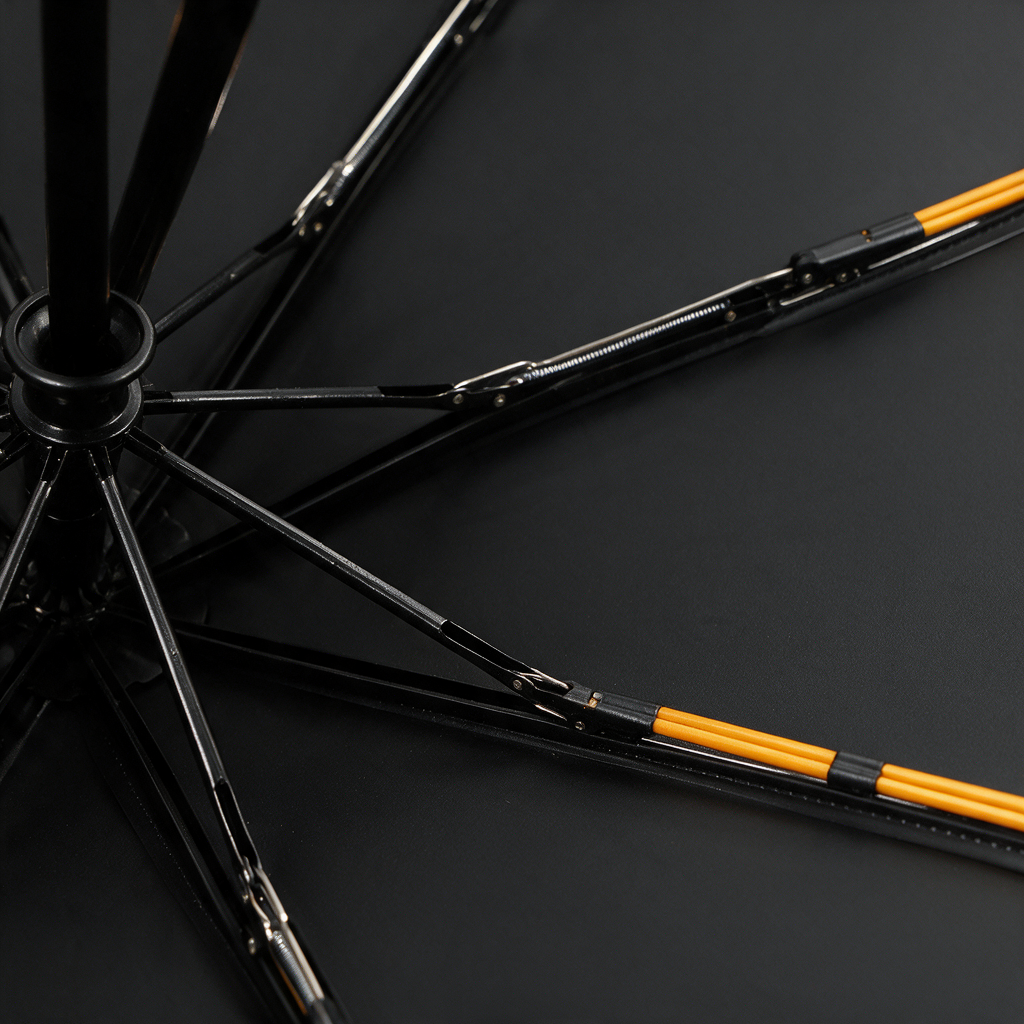
A rib is a thin rod with a hinge partway along so it can fold. Under a gust the load concentrates at that hinge. Plain aluminium ribs bend there, and because aluminium does not spring back, the umbrella stays inside out with a permanent kink. Steel ribs are stiffer and heavier, which is why full-size golf umbrellas use them, but they still fail at the joint once bent.
Fibreglass behaves differently. It bends a long way and returns to shape, the way a fishing rod does. A frame with fibreglass ribs, or aluminium ribs with fibreglass tail sections where the canopy edge takes the load, can flip inside out in a gust and flip back when the wind drops, with nothing bent. That is the whole trick. It is not that the umbrella never inverts; it is that inverting does no damage.
Do more ribs make an umbrella stronger?
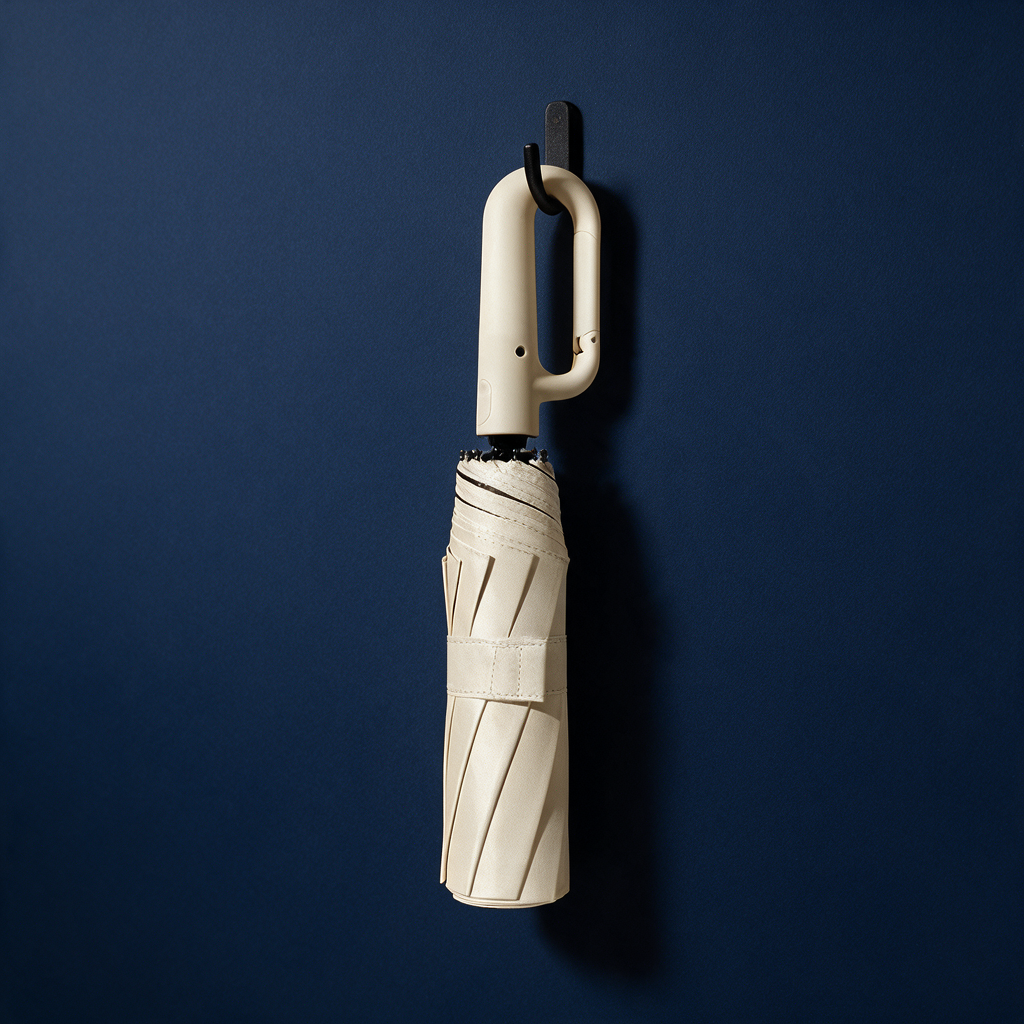
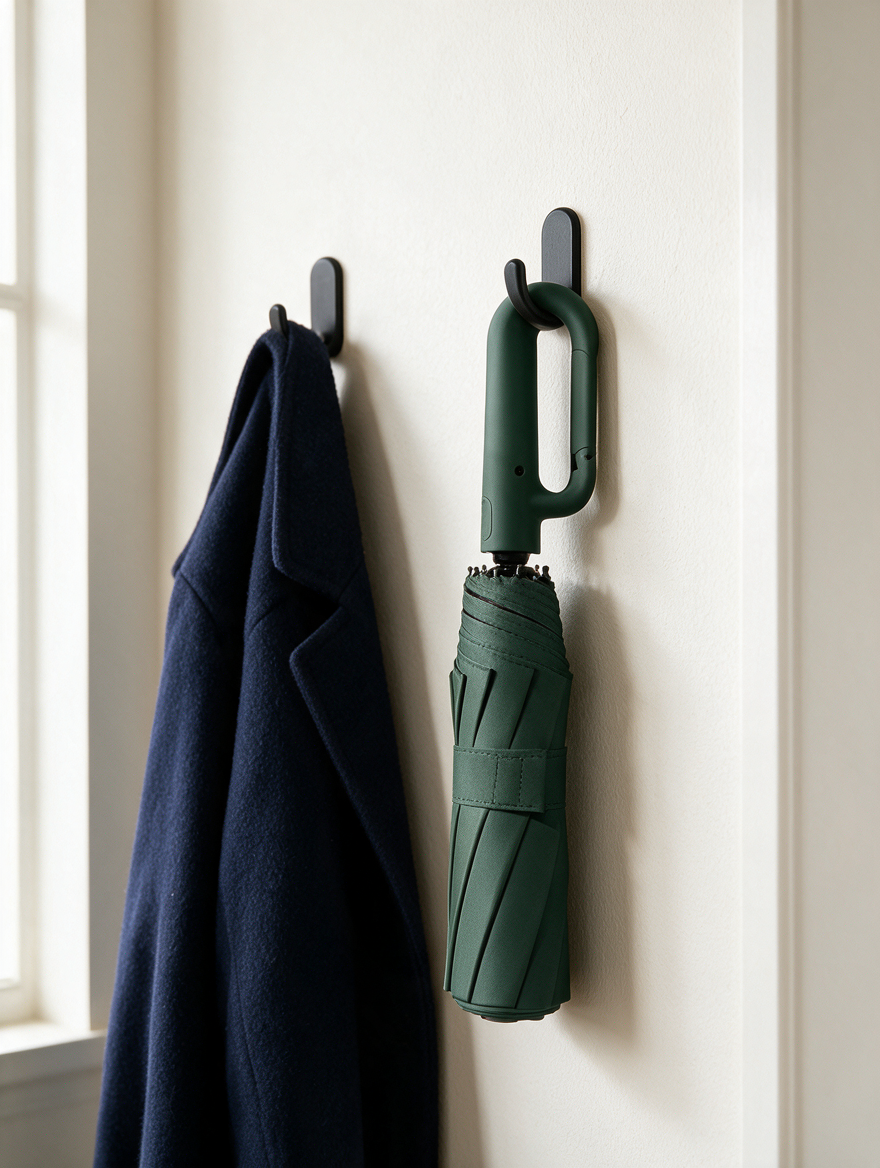
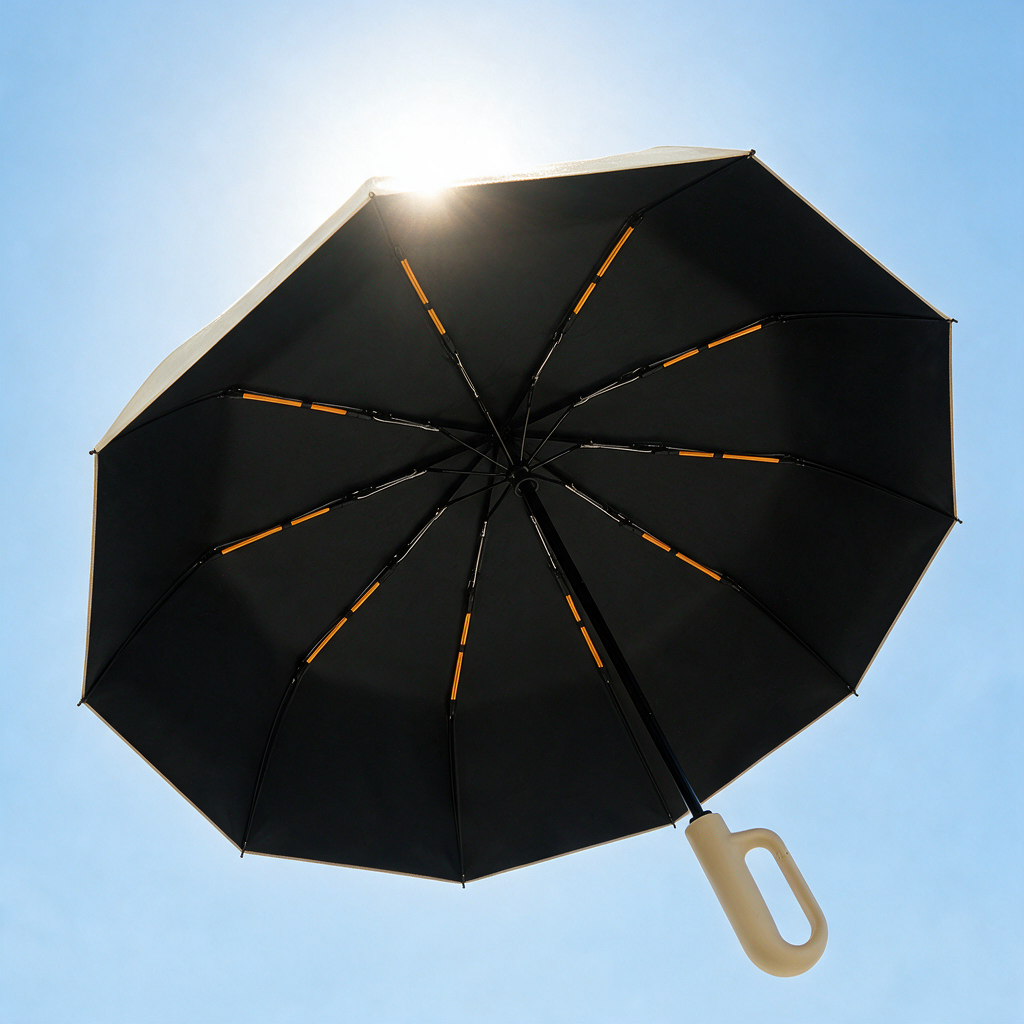
Eight ribs is the usual number on a compact. Ten spreads the load more evenly around the canopy, so no single rib takes a whole gust. A triangular, honeycomb-style frame, where each rib is braced by a stretcher forming a triangle with the shaft, is stiffer for its weight than a simple two-piece rib. Ten ribs in a triangular frame is the arrangement the Ombriel Loop uses, and the reason it is rated for Beaufort force 6.
What does a Beaufort rating mean?
The Beaufort scale was written for sailors in 1805 and it is still the clearest way to describe wind. The forces that matter for an umbrella:
- Force 4, moderate breeze, 13 to 18 mph. Raises dust and loose paper. Any umbrella copes.
- Force 5, fresh breeze, 19 to 24 mph. Small trees sway. Cheap compacts start to invert.
- Force 6, strong breeze, 25 to 31 mph. Large branches move, umbrellas are "used with difficulty" in the official wording. A well-made compact should survive this. This is the Loop's rating.
- Force 7, near gale, 32 to 38 mph. Whole trees move. Walking into it is hard work. Close the umbrella.
- Force 8 and above, gale. Twigs break off trees. Nobody's umbrella is rated for this and you should not be outside with one.
So a force 6 rating does not mean the umbrella is indestructible. It means it will get you home on a normal rough day, which is the day that kills most of them.
What should you do in a gust?
Point the top of the umbrella into the wind so it pushes the canopy onto the frame rather than under it. Hold it lower and closer to your head, which shortens the lever. If it does invert, do not fight it; lower it out of the wind and it will come back on its own if the ribs are fibreglass. If you are being pulled around, close it. An umbrella is for rain, not a sail.
The short answer
Wind does not break umbrellas, hinges do. Fibreglass hinges bend and recover, aluminium ones bend and stay bent. Ten ribs beat eight. And a Beaufort rating is the only wind claim worth reading, because it is a number you can look up on the forecast. Our buying guide covers the rest of the checklist.